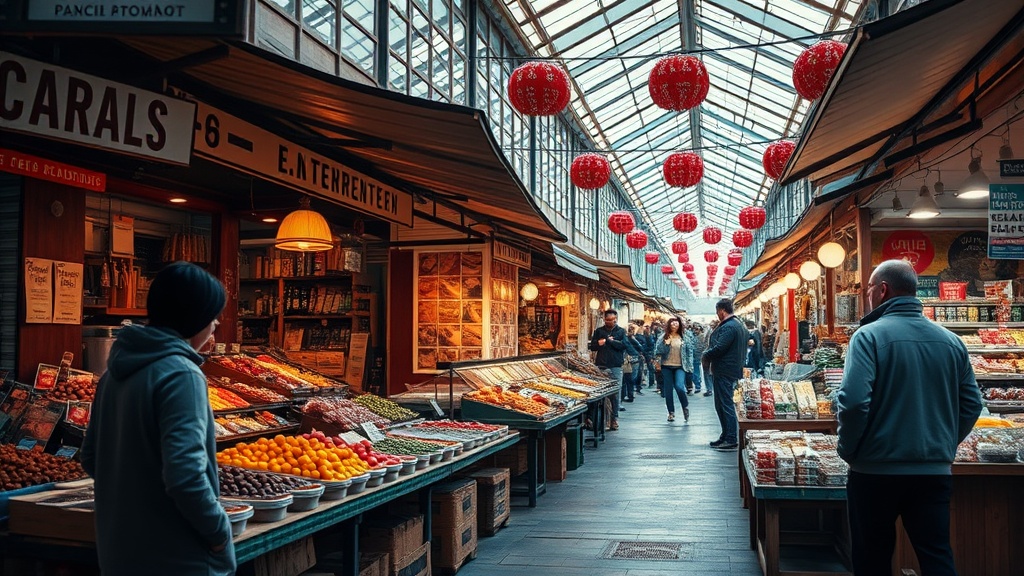
Navigating Local Markets Without a Map

Have you ever walked into a massive open-air market and immediately felt a sense of panic because you had no idea where to start? This guide breaks down how to wander through large-scale local markets using sensory cues and social intuition rather than a digital map or a rigid itinerary. You'll learn how to identify quality produce, negotiate prices without looking like a target, and find the best food stalls by watching the locals.
Local markets are chaotic. They're loud, crowded, and often smell like a mix of spices, raw fish, and damp stone. But that's exactly where the best stuff is. If you try to follow a GPS through a bazaar in Marrakech or a wet market in Bangkok, you'll fail—the signal will drop, and the streets are too narrow anyway.
Instead, you need to develop a sense of direction based on human behavior. It's about reading the room (or the stall) rather than staring at a screen.
How Do I Find the Best Food Stalls?
The best food stalls are almost always the ones with the longest lines of local residents. If you see a crowd gathered around a specific vendor, don't assume it's a tourist trap; usually, it's the exact opposite. Locals know where the quality is, and they aren't going to stand in line for mediocre food.
Look for these specific indicators:
- High Turnover: If a vendor is moving through their stock quickly, the ingredients are fresh.
- The "Steam" Factor: In many Asian markets, follow the steam. If a stall has a constant cloud of vapor, they're likely serving hot, freshly made noodles or dumplings.
- Specialization: Avoid the "everything" stalls. The best vendors usually do one thing—like grilled meats or fermented vegetables—and do it exceptionally well.
- The Smell Test: If a stall smells like toasted spices or fresh herbs, you're on the right track. If it smells like old oil, move on.
I once spent an entire afternoon in a market in Taipei looking for the perfect bowl of beef noodle soup. I ignored the brightly lit signs and instead followed a group of elderly locals into a narrow alleyway. It was the best meal of my life. If you want to see how these environments work on a larger scale, check out my deep dive into street food night markets in Taipei.
One thing to remember: don't be afraid to eat where the locals eat. It's the fastest way to understand the local food culture. If you're worried about stomach issues, stick to food that is cooked hot right in front of you. This ensures it hasn't been sitting out at room temperature for hours.
How Much Cash Should I Carry?
You should carry enough small-denomination cash to cover your entire day of snacking and shopping, as most market vendors do not accept credit cards or digital payments. Relying on a card in a traditional market is a recipe for frustration. Even if a vendor says they take "mobile pay," they might actually mean a specific local app that requires a local bank account.
The following table illustrates a typical budget breakdown for a day of market exploration in a mid-range destination:
| Item Type | Typical Cost (USD) | Payment Method |
|---|---|---|
| Street Food Snack | $2 - $5 | Cash Only |
| Full Meal | $5 - $12 | Cash Only |
| Local Fruit/Produce | $3 - $8 | Cash Only |
| Handmade Souvenir | $10 - $30 | Cash/Card (if large shop) |
Always keep your money in a secure, internal pocket or a dedicated money belt. You don't want to be fumbling with a wallet in a crowded space. It's a distraction you don't need. A quick tip: keep your larger bills tucked away in a different part of your bag and only pull out small change for small purchases. It keeps you much more inconspicuous.
If you're traveling through multiple countries, you might want to look at the official exchange rates or banking guidelines to ensure you're prepared for different currency shifts. Using an ATM near the market is often better than exchanging money at a kiosk, which usually carries predatory fees.
How Can I Avoid Being Overcharged?
The most effective way to avoid being overcharged is to observe a transaction between a local and a vendor before you approach them. Watch the interaction. See how much the person pays and how much they negotiate. This gives you a baseline for the "real" price of the item.
Negotiation is an art-form in many cultures, but it's also a social contract. If you're in a place where haggling is expected, don't be afraid to do it—but do it with a smile. If you act aggressive, you'll lose the spirit of the interaction.
Here are a few rules for successful market interactions:
- The "First Offer" Rule: Never accept the first price offered. It's almost always a starting point.
- The Small Increment: Don't try to slash the price by 50% immediately. Aim for a 10-20% discount. It's more realistic and less insulting.
- The "Walk Away" Technique: If the price isn't moving, politely thank them and start to walk away. If they have room to move, they'll often call you back with a better offer.
- Carry Small Change: If you have a $50 bill and the item costs $5, the vendor might claim they don't have change. It's a common tactic to avoid giving you back the correct amount.
It's also worth noting that some shops have fixed prices. If you see a price tag or a sign that says "Fixed Price," don't bother negotiating. It's a waste of time and can actually be quite rude in certain cultures. If there's no sign, assume there's a conversation to be had.
I've found that being a "knowledgeable" shopper helps. If you know exactly what a certain spice or fruit should cost, you're less likely to be taken advantage of. It shows you aren't just a random tourist passing through, but someone who respects the local commerce. This mindset actually helps you blend in better, which is a habit I've found useful in many cities—much like making any city feel like home.
One final thought: don't overthink it. Markets are meant to be sensory experiences. If you get lost, you'll likely find something even better than what you were looking for. The best way to navigate is to stop looking at your phone and start looking at the world around you.
Steps
- 1
Identify a central landmark
- 2
Follow the scent of local spices
- 3
Observe the flow of foot traffic
- 4
Ask a local vendor for a quick direction