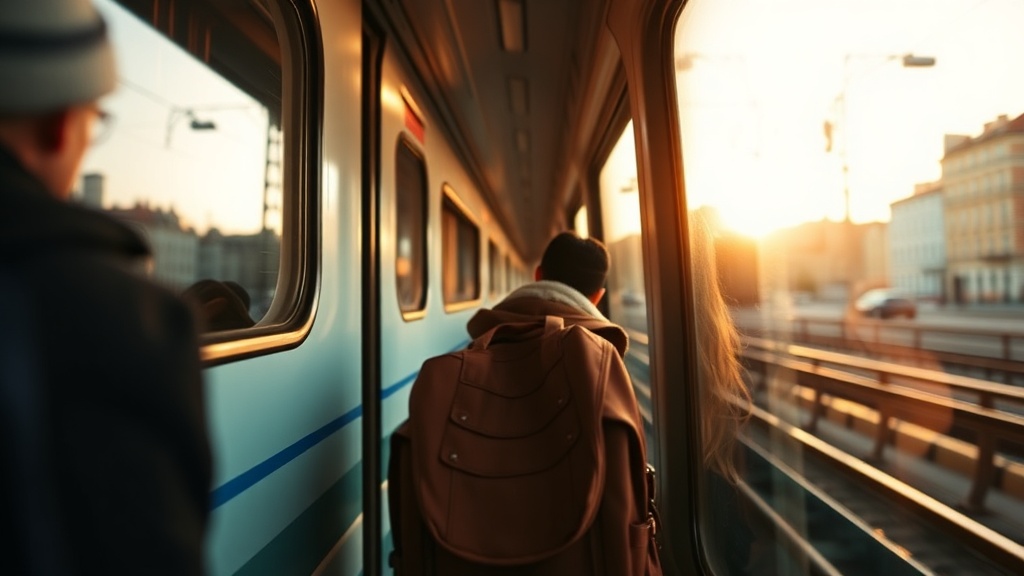
Packing Light for a Multi-City European Train Journey

A traveler stands on a crowded platform in Brussels, staring at a heavy, oversized suitcase that won't fit into the overhead rack of a Thalys train. As the train pulls away, they realize they'll have to lug that weight through cobblestone streets and up narrow staircases in every single city on their itinerary. This is the reality of poor planning.
Packing for a multi-city European rail trip requires a different mindset than a standard beach vacation. You aren't just packing for a destination; you're packing for the logistics of moving between them. This guide breaks down the exact strategies for choosing gear, selecting clothing, and managing weight so you can move through train stations and metro systems with ease.
What is the Best Type of Luggage for European Trains?
A medium-sized, soft-sided backpack or a lightweight wheeled carry-on is the best choice for European rail travel. While hard-shell suitcases look sleek, they are notoriously difficult to shove into tight train compartments or narrow car trunks. Soft-sided bags—think Osprey or Patagonia—can be compressed and squeezed into spaces where a rigid shell simply won't go.
If you choose wheels, stick to a carry-on size. European train stations often involve stairs, and many older metro systems are not fully accessible. A heavy, checked bag becomes a liability the moment you encounter a staircase. A high-quality 40L backpack is often the gold standard here because it keeps your hands free for coffee or transit passes.
Consider these three main categories of luggage for your trip:
- The One-Bag Backpacker: Best for those moving frequently between cities. Brands like Osprey make technical packs that distribute weight well.
- The Carry-On Roller: Good for those staying in hotels near stations. Look for Away or Rimowa for durability, but ensure it's a size that fits in overhead bins.
- The Hybrid: A small wheeled bag with backpack straps. This is a great middle ground for those who want the comfort of a pack but the mobility of wheels.
Don't forget about the "personal item." A small, lightweight daypack is necessary for your passport, phone, and snacks during the actual train ride. You'll want to be able to pull these items out without digging through your main bag in a cramped seat.
How Much Should a Travel Bag Weigh?
Aim for a total bag weight of under 10 kilograms (about 22 pounds) to ensure you can carry it yourself through various transit modes. Most European budget airlines and even some high-speed rail services have strict weight limits for carry-on items. If you're over the limit, you'll be stuck paying hefty fees at the gate or station.
Weight is the enemy of mobility. If you're hopping on and off the Deutsche Bahn or SNCF, you'll likely be carrying your bag through station tunnels, up stairs, and across platforms. A 15kg bag might feel fine in your living room, but it feels like a boulder after three blocks of cobblestones. It's a hard lesson to learn the hard way.
| Item Category | \Recommended Weight | Example Items |
|---|---|---|
| Electronics | 1.5 - 2 kg | Phone, charger, power bank, e-reader |
| Clothing | 4 - 5 kg | 3 shirts, 2 pants, underwear, light jacket |
| Toiletries | 1 kg | Solid soap, small toothpaste, minimal liquids |
| Miscellaneous | 1 kg | Passport, documents, reusable water bottle |
The trick to staying light is the "Rule of Three." Pack three of everything: one to wear, one to wash, and one to dry. This works perfectly for T-shirts, socks, and underwear. You can easily wash items in a hotel sink or a local laundromat, which saves massive amounts of space.
How Do I Organize My Clothes for Multiple Destinations?
Use packing cubes to compress your clothing and keep your bag organized. Packing cubes act like drawers for your suitcase, allowing you to pull out exactly what you need without exploding the entire contents of your bag onto a train floor. This is especially helpful when you're working in tight spaces.
Organization isn't just about neatness; it's about speed. When you're moving between a train and a hotel, you don't want to be hunting for a single pair of socks. Eagle Creek makes some highly regarded compression cubes that can significantly reduce the volume of your soft goods.
Here is a quick checklist for organizing your gear:
- Categorize by Type: Use one cube for tops, one for bottoms, and one for undergarments.
- Use Compression: Squeeze the air out of your cubes to save space.
- The "Heavy" Rule: Keep your heaviest items (like a denim jacket or heavy boots) at the bottom of the bag near the straps to maintain balance.
- The Tech Pouch: Keep all cables and adapters in a single, dedicated small pouch so they don't get lost in the larger cubes.
A pro tip for European travel: pack layers. You might start the morning in a chilly London fog and end the afternoon in a sunny Parisian cafe. Instead of packing a heavy sweater, bring a light base layer and a versatile jacket like the Patagonia Nano Puff. It provides warmth without the bulk.
It's also smart to keep your most important documents in a separate, secure place. I've seen people lose their entire lives because their "easy access" bag was left on a train seat. Check the official travel guidelines for your specific destinations to ensure you have the right documentation and understand any weight-restricted baggage policies for your specific airline or rail carrier.
If you find yourself needing to settle into a new city quickly, remember that your gear should help you feel grounded. Developing a system for your belongings can actually help you feel more at home in unfamiliar places. It's a habit that carries over into how you interact with the culture itself. If you want to see how I approach local culture more broadly, check out my post on the one travel habit that makes any city feel like home.
One thing to watch out for is the "just in case" mentality. We all do it. We pack a heavy book, an extra pair of shoes, or a formal outfit we probably won't wear. Every "just in case" item is a pound of weight you'll have to carry through a train station. If you haven't worn it in the last three trips, leave it at home. The local shops in Europe are excellent, and you can always buy a souvenir T-shirt if you truly need one.
Lastly, always double-check your bag's dimensions against your transport method. If you're taking a budget flight between cities, the rules for what constitutes a "personal item" versus a "carry-on" are incredibly strict. A bag that fits in an overhead bin might still be too large for the under-seat storage required by some low-cost carriers.
Steps
- 1
Choose a versatile color palette
- 2
Select multi-purpose footwear
- 3
Utilize compression packing cubes
- 4
Prioritize lightweight fabrics