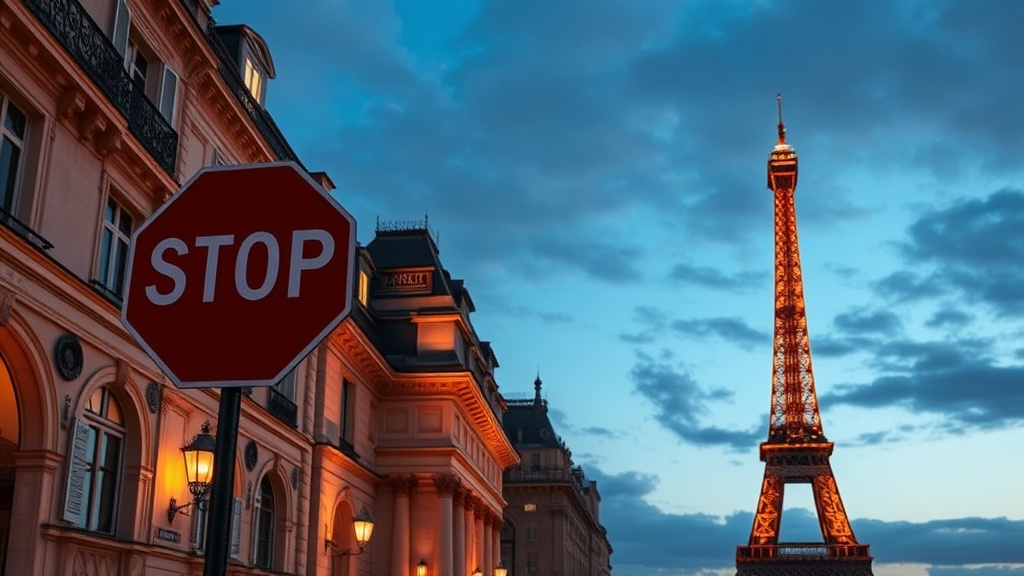
Why You Should Stop Visiting Paris Only for the Landmarks
Most travelers think a trip to Paris is defined by the height of the Eiffel Tower or the size of the Louvre. They assume that to "do" Paris, you must stand in a queue for three hours to see a single painting. This is a mistake. If you only visit the landmarks, you aren't actually experiencing Paris—you're just checking boxes on a list. The real soul of the city lives in the rhythm of the arrondissements, the specific way a neighborhood smells after a rainstorm, and the way people interact in a local square. To truly see the city, you have to look away from the monuments and toward the street level.
The obsession with the "big sights" creates a version of Paris that is sanitized and often frustrating. You spend your time fighting crowds and checking your watch. Instead, the real magic happens when you drift into a neighborhood like the 11th or the 10th. These areas offer a sense of place that a postcard simply can't capture. You'll find better food, more authentic interactions, and a sense of way of life that feels lived-in rather than performed.
Where can I find authentic food in Paris outside of tourist areas?
If you want to eat like a local, get away from the restaurants with English menus posted on the sidewalk. In the 11th arrondissement, the culinary scene is driven by young chefs who focus on seasonal ingredients and minimal fuss. You aren't looking for white tablecloths; you're looking for a crowded bistro where the wine list is short and the chalkboard menu changes daily.
- The Bistronomy Movement: Look for spots that focus on "Bistronomy"—high-quality cooking in a casual setting.
- The Local Boulangerie: A decent baguette shouldn't cost more than a Euro or two. If there's a line of locals at 8:00 AM, you've found the right place.
- The Marché d'Aligre: This market is a sensory explosion. It's much more vibrant and less polished than the more famous markets, offering a raw look at how Parisians shop.
Eating in a tourist center often means paying a premium for mediocre, reheated food. When you move into the residential districts, the price-to-quality ratio shifts dramatically. You'll find that a simple meal of steak frites or a seasonal vegetable tart can be both affordable and unforgettable.
What are the best neighborhoods for walking through Paris?
Paris is a city meant for pedestrians, yet many visitors rely too heavily on the Metro. While the Metro is efficient, it can feel disconnected from the physical reality of the city. To feel the pulse of Paris, you need to walk. Each neighborhood has its own distinct architecture, street noise, and pace.
The Marais is a classic choice, but it can feel quite dense and crowded. If you want something that feels more expansive, try the Canal Saint-Martin area. It's a favorite for locals who want to sit by the water, enjoy a drink, and watch the world go by. The atmosphere here is much more relaxed than the frantic energy near the Louvre. It’s a place where you can actually breathe.
Another great option is the Montmartre area, but avoid the main square where the artists congregate. Instead, wander the backstreets behind the Sacré-Cœur. The steep, winding alleys offer a sense of seclusion and history that the main thoroughfares have lost to commerce. You'll find small, quiet corners that feel like a village tucked inside a metropolis.
How do I avoid the crowds in major Parisian cities?
The trick isn't to avoid the city, but to change your timing. If you absolutely must see the Louvre or the Musée d'Orsay, go during the late-night openings or very early in the morning. The crowds follow a predictable pattern, and if you can disrupt your schedule to defy that pattern, you'll win. Most people are at the monument at 11:00 AM; by 4:00 PM, the energy shifts elsewhere.
Another way to avoid the heavy tourist flow is to embrace the "slow travel" mindset. Instead of trying to see five museums in three days, pick one and spend the rest of your time simply existing in a park or a cafe. The official Paris tourism site offers great info on sites, but it won't tell you when the crowds are at their worst. Use apps to check real-time transit and foot traffic if you can.
Don't be afraid to wander without a destination. Some of the best experiences in any great city come from getting slightly lost. When you follow a GPS strictly, you miss the small details—the way light hits a limestone building or the sound of a street performer in a quiet square. A little bit of unplanned wandering is the best way to find the version of Paris that doesn't belong to the tour groups.
The goal of travel shouldn't be to collect sights, but to collect perspectives. If you spend your entire trip looking up at monuments, you'll miss the life happening right at your feet. The people, the smells, and the small, quiet moments are what you'll actually remember a year from now. A monument is a static thing; a neighborhood is a living, breathing entity.
Take the time to sit. Sit at a cafe for an hour. Order a coffee, read a book, and just watch. You'll learn more about the culture of Paris by watching a neighbor argue over a newspaper than you will by standing in line for a famous painting. This is the difference between visiting a city and actually being in it.